By The Peterson Lawson Group
Making your home more energy efficient is one of the smartest investments a homeowner can make for long-term cost savings, daily comfort, and resale positioning. Whether you are preparing to sell, planning a renovation, or simply looking to reduce monthly utility bills, these upgrades deliver measurable returns regardless of where you live. Here are five of the best ways to make your home more energy efficient.
Key Takeaways
- Heat pump HVAC systems are three times more efficient than gas furnaces and are among the highest-impact upgrades available for both comfort and long-term cost savings
- Air sealing and insulation consistently deliver some of the strongest returns of any home efficiency investment and are a prerequisite for most rebate program eligibility
- Smart thermostats are one of the lowest-cost and highest-impact upgrades available
- Solar with battery storage reduces grid dependence, lowers electricity costs, and adds measurable resale value in most markets
Upgrade to a Heat Pump HVAC System
Heat pumps are three times more efficient than conventional gas furnaces and provide both heating and cooling from a single system. Because they move heat rather than generate it, they perform across a wide range of climates, and federal and state incentive programs have expanded the financial case for upgrading significantly. Confirm current rebate availability with a certified contractor before purchasing, as program funding levels change.
What to Know
- Heat pumps handle both heating and cooling from one unit, reducing equipment cost, maintenance overhead, and the space required for mechanical systems
- Cold-climate heat pump models maintain efficiency in temperatures well below freezing, making them a practical option in most parts of the country
- Pairing a heat pump with a smart thermostat and time-of-use utility pricing maximizes the efficiency benefit by shifting consumption to lower-rate periods
- Work with a certified contractor who knows the current rebate landscape in your area
Air Seal and Insulate
Air sealing and insulation are the upgrades most homeowners overlook and that deliver the most consistent returns. Gaps around windows, doors, attic hatches, and utility penetrations allow conditioned air to escape, forcing heating and cooling systems to work harder and run longer than they should. A professional energy audit is the most reliable way to identify where leakage is occurring and prioritize improvements by cost and impact.
What to Know
- Air sealing and insulation are prerequisites for most whole-home efficiency program eligibility
- Duct sealing addresses one of the most common sources of HVAC inefficiency
- A professional home energy audit identifies specific leakage locations and ranks improvements by impact
- The combination of air sealing and insulation typically delivers the fastest payback period of any efficiency upgrade category
Install a Smart Thermostat
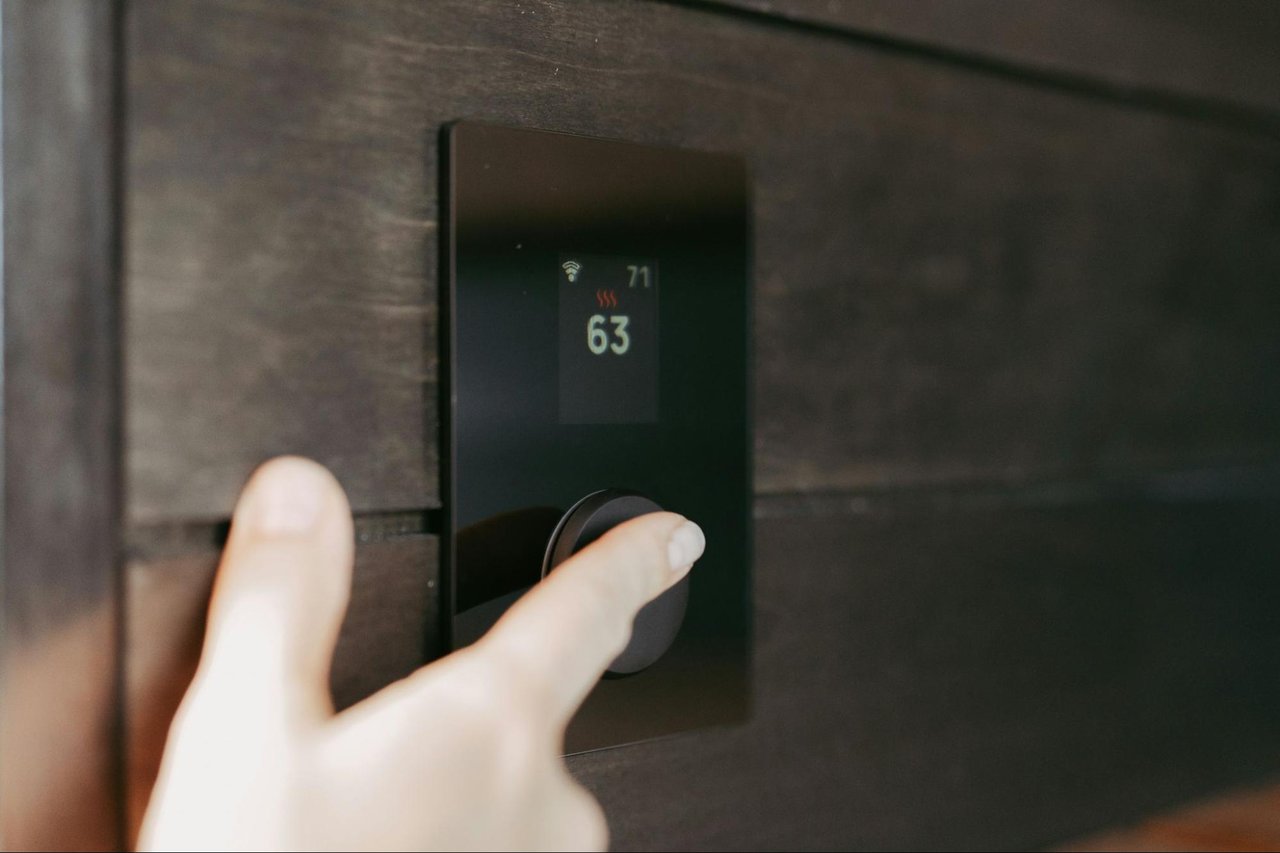
A smart thermostat is one of the lowest-cost and most immediately impactful upgrades available. By learning household patterns and adjusting heating and cooling cycles automatically, it eliminates energy waste during unoccupied periods, and most models pay for themselves within the first year through reduced utility bills. Many utility companies also offer rebates on qualifying models.
What to Know
- Smart thermostats learn household patterns and adjust automatically
- Most utility companies offer rebates on qualifying smart thermostat models
- Integration with time-of-use utility pricing shifts consumption toward lower-rate periods automatically
- Occupancy sensing reduces conditioning in rooms not in active use
Install Solar with Battery Storage
The federal Residential Clean Energy Credit currently provides a 30% tax credit on the full cost of a solar and battery storage installation with no lifetime cap. Pairing solar with battery storage stores excess daytime generation for evening peak-rate use, reducing grid dependence and providing power continuity during outages.
What to Know
- The federal 25D Residential Clean Energy Credit provides a 30% tax credit on solar and battery storage with no lifetime cap
- Battery storage allows excess solar generation to be used during evening peak-rate hours
- Homes with solar and battery storage consistently command higher prices and attract stronger buyer interest
- Confirm current net metering policies with a local installer before making financial projections
Install EV Charging Infrastructure
EV charging has moved from a luxury feature to a mainstream buyer expectation in most markets. Installing a Level 2 charger is the practical standard for daily EV use, and doing so during an existing electrical project is significantly less expensive than retrofitting later.
What to Know
- A Level 2 charger on a dedicated 240-volt circuit provides a full overnight charge
- Installing EV charging during a panel upgrade or alongside another major electrical project is significantly less expensive than retrofitting as a standalone project later
- A dedicated 240-volt EV circuit can also support heat pump and heat pump water heater installations
- Homes with Level 2 EV charging are increasingly preferred by buyers in mid and upper market segments
FAQs
What is the best first step toward making my home more energy efficient?
A professional home energy audit is the most reliable starting point. It identifies your home's specific energy loss sources and ranks improvements by cost and impact. Air sealing and insulation are typically the most cost-effective first step and a prerequisite for most rebate program eligibility. HVAC and water heating upgrades follow, with solar and battery storage performing best after the home's envelope and mechanical systems are already optimized.
Are there financial incentives available for energy efficiency upgrades?
Yes. The federal 25D credit provides a 30% tax credit on solar and battery storage with no lifetime cap. Heat pump and insulation upgrades may qualify for federal credits and state or utility rebates depending on your location.
Do energy efficiency upgrades add value when selling a home?
Consistently. Energy-efficient homes command higher prices, attract more buyer interest, and sell more quickly than comparable less-efficient properties. The strongest resale case comes from permanent, documented improvements — a high-performing HVAC system, good insulation, and EV charging infrastructure that buyers can verify through permits and utility records.
Contact The Peterson Lawson Group Today
Energy efficiency is one of the most meaningful investments a homeowner can make for daily comfort, long-term savings, and resale positioning. At The Peterson Lawson Group, we work with buyers and sellers throughout Napa Valley and can help you understand how efficiency upgrades affect property value in today's market.
Reach out to us at The Peterson Lawson Group to get started.