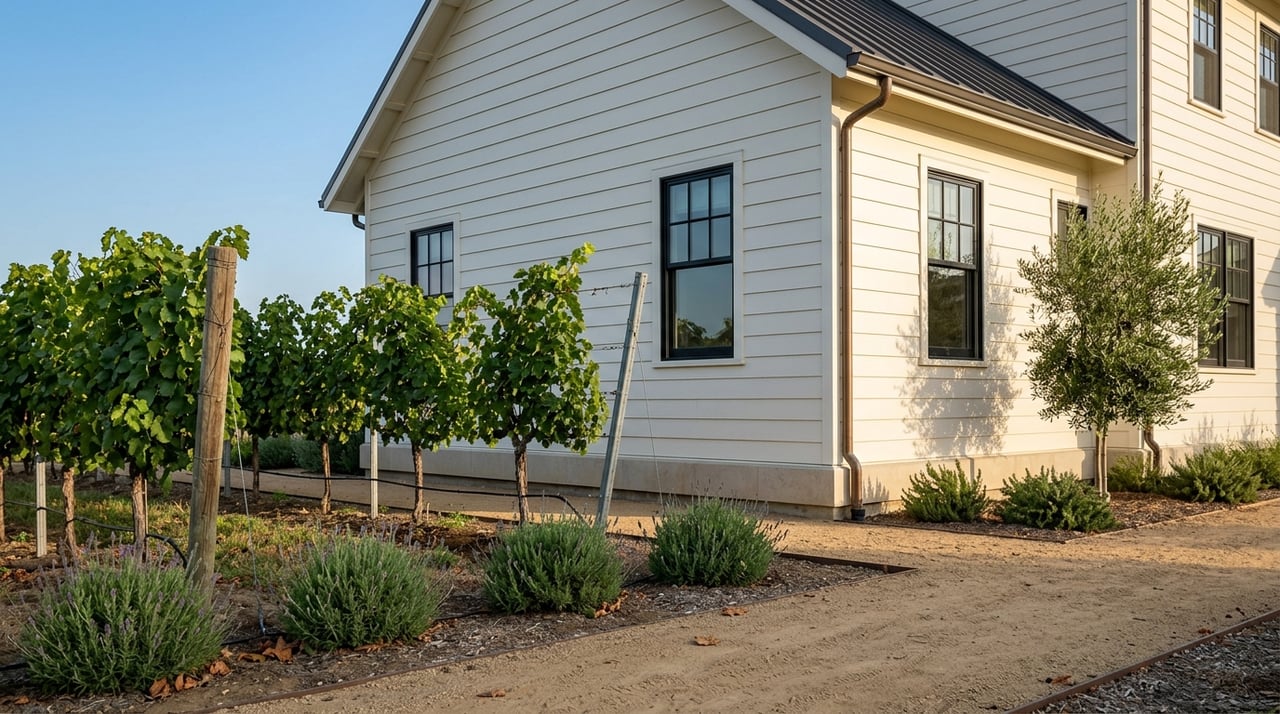
Dreaming of vineyard views in Sonoma? It is easy to fall in love with the scenery, privacy, and sense of space, but a home near vines comes with more than a beautiful backdrop. If you are considering a vineyard-adjacent property, you need to understand how agriculture, zoning, water, access, and wildfire planning can shape daily life and long-term ownership. Let’s dive in.
Why Vineyard-Adjacent Living Feels Different
A home beside vineyards often offers exactly what draws buyers to Sonoma County in the first place: open views, a rural setting, and a strong connection to the land. In many cases, nearby agricultural land may also be protected by conservation or open-space easements, which can help preserve the outlook and the surrounding character over time.
That said, you are not just buying a view. You are buying into an active agricultural environment, and that distinction matters. Sonoma County’s land-use framework is designed to conserve and encourage agriculture, so vineyard operations are part of the setting, not an occasional exception.
Expect Active Farm Operations
If a home sits near working vineyards or other farmland, you should expect the realities that come with agricultural use. California’s disclosure framework warns that nearby farming activity may involve noise, odors, dust, insects, machinery, pumps, deliveries, lighting, and the application of fertilizers, pesticides, and herbicides.
These activities may happen at different times of day, depending on the season, weather, and the needs of the crop. In other words, a peaceful morning view can still come with tractors, spray activity, or harvest traffic at certain times of year.
Right-to-Farm Matters in Sonoma County
California’s right-to-farm law protects qualifying agricultural operations from nuisance claims once they have operated for more than three years, so long as the use was not a nuisance when it began. Sonoma County’s ordinance also notes that residential and commercial uses that move into agricultural areas are often the source of nuisance complaints.
For buyers, the practical takeaway is simple: your expectations should match the setting. If you want vineyard adjacency, it helps to treat agricultural activity as a normal part of the ownership experience.
Nearby Farmland Can Trigger Disclosure
California requires a right-to-farm notice when a home is within one mile of designated farmland shown on the Important Farmland Map. That disclosure is meant to make sure buyers understand that lawful agricultural operations may affect the property experience.
This is not necessarily a red flag. It is a reminder to ask informed questions early, before you become emotionally committed to a property.
Review Zoning on a Parcel Basis
One of the biggest mistakes buyers make is assuming that all vineyard-area properties function the same way. In Sonoma County, zoning can vary significantly from parcel to parcel, and the exact rules may depend on both the base zoning district and any parcel-specific combining districts.
Agricultural zones such as LIA, LEA, and DA are designed for different land-use patterns and intensities. Some parcels may also be affected by Williamson Act or agricultural-preserve rules, which can further limit nonagricultural use.
What Zoning Can Affect
Parcel-specific zoning review can influence how you evaluate a home and your future plans for it. Depending on the parcel, zoning may affect:
- Potential additions or site improvements
- Accessory structures or support uses
- Setbacks and development envelopes
- How surrounding land may continue to be used
- Whether nearby agricultural activity is likely to remain in place
County GIS tools are a helpful starting point, but Permit Sonoma notes that some mapping layers are illustrative only. Before drawing firm conclusions, it is wise to confirm details through parcel-specific review.
Check Title, Easements, and Access Early
In rural and vineyard-adjacent areas, title and access issues deserve close attention. A preliminary title report can reveal CC&Rs, easements, rights of way, and setbacks that may materially affect how you use the property.
This matters more than many buyers expect. A long driveway, a shared access route, or utility infrastructure crossing the land can all affect convenience, privacy, cost, and future plans.
Access Improvements May Need County Approval
If a property uses or crosses a county right-of-way, some work may require an encroachment permit from Sonoma County. That can include items such as driveway aprons, utility lines, curbs, gutters, sidewalks, or similar improvements.
If you are thinking beyond the house itself and considering upgrades to access or infrastructure, this is worth checking before closing. It is far better to understand those limits upfront than to discover them after purchase.
Water and Septic Can Shape Ownership Costs
For many rural Sonoma County homes, utilities are not as simple as city service and a monthly bill. Many properties rely on wells and onsite wastewater treatment systems, and these systems can have a major impact on both cost and due diligence.
Permit Sonoma notes that non-standard onsite wastewater treatment systems require permits. Its water-availability mapping also states that if the water source is not located on the same parcel, an applicant may need to show both legal access and sufficient water availability.
Well Planning Needs Extra Verification
If you are buying with plans to drill a new well or replace an existing one, do not assume permits will be straightforward. Permit Sonoma states that it is currently suspending non-emergency well permits under a Sonoma County Superior Court order, so buyers should confirm current status before relying on future well work.
Sonoma County’s updated well review process also created a Public Trust Review Area, where new or replacement wells are evaluated for potential impacts to public trust resources before approval. That makes parcel-level review especially important when water strategy is central to your buying decision.
Septic and Site Conditions Go Together
Septic suitability often ties directly to site conditions, drainage, and topography. What looks like a simple country property on first visit may involve additional review if the system is older, non-standard, or tied to land constraints.
This is one reason experienced local guidance matters in vineyard-adjacent purchases. The details that shape ownership costs are often underground, mapped, or regulatory rather than visible from the driveway.
Flood and Drainage Deserve a Closer Look
Low-lying parcels or homes near creeks may fall within floodway or floodplain combining districts. In Sonoma County, that can introduce additional standards, studies, and construction limits.
Even if flood concerns are not your first question, they can influence future improvements, insurance planning, and how you evaluate the land beyond the main residence. A scenic creekside setting may be appealing, but it should still be reviewed through the lens of parcel-specific constraints.
Wildfire Risk Is a Core Buying Factor
In Sonoma County, wildfire planning is not a side issue. CAL FIRE hazard-zone mapping is based on factors such as fuel loading, slope, fire weather, and wind, and those conditions can shape both ownership costs and property preparedness.
The Office of the State Fire Marshal says defensible space and home hardening can dramatically improve survivability. For buyers, that means wildfire risk should be part of your practical review, not just your emotional reaction to the setting.
Fire Maps and Insurance Are Not the Same
It is also important to separate hazard maps from insurance decisions. The California Department of Insurance says CAL FIRE hazard maps do not determine insurance rates or availability, because insurers use their own wildfire risk models.
Still, mitigation can help improve insurability and pricing. If a property has strong defensible space, thoughtful access, and evidence of home-hardening measures, that may support a more confident ownership picture.
Resale Value Depends on Informed Expectations
Vineyard views can absolutely be a premium feature. But long-term value tends to be strongest when a buyer fully understands the property’s tradeoffs from the beginning.
If agricultural activity, water limits, wildfire mitigation work, or access constraints come as a surprise later, they can narrow the future buyer pool. When those same factors are understood and accepted upfront, they become part of the property story rather than a problem discovered too late.
Build the Right Due Diligence Team
Vineyard-adjacent purchases often benefit from a more layered review than a typical suburban home search. Depending on the property, buyers may benefit from support that includes a local agent, title officer, and, when relevant, a water or septic consultant, fire-mitigation contractor, or viticulture professional.
That does not mean every property is complicated. It means the smartest path is usually a parcel-specific one, grounded in the actual conditions of the land, the disclosures, and the county review framework.
If you are considering a vineyard-adjacent home in Sonoma, a clear-eyed approach can protect both your lifestyle goals and your investment. For thoughtful guidance on Wine Country properties with agricultural context, connect with Lauren Lawson — Peterson Lawson Group.
FAQs
What should you expect when buying a vineyard-adjacent home in Sonoma County?
- You should expect an active agricultural setting that may include noise, odors, dust, insects, machinery, deliveries, lighting, and spray activity associated with lawful farm operations.
How does right-to-farm affect Sonoma County homebuyers?
- California’s right-to-farm law protects qualifying agricultural operations from certain nuisance claims, and buyers near designated farmland may also receive a right-to-farm disclosure before closing.
Why is parcel-specific zoning important for Sonoma vineyard-area homes?
- Sonoma County zoning can vary by base district and combining district, so the exact rules affecting use, improvements, and surrounding land patterns can differ significantly from one parcel to another.
What utility issues matter for rural Sonoma County properties?
- Many rural properties rely on wells and onsite wastewater treatment systems, so water availability, well permitting, and septic permitting can all affect cost, timing, and long-term ownership.
Do wildfire maps determine insurance for Sonoma County homes?
- No. The California Department of Insurance says CAL FIRE hazard maps do not determine insurance rates or availability, though mitigation measures may help improve insurability and pricing.